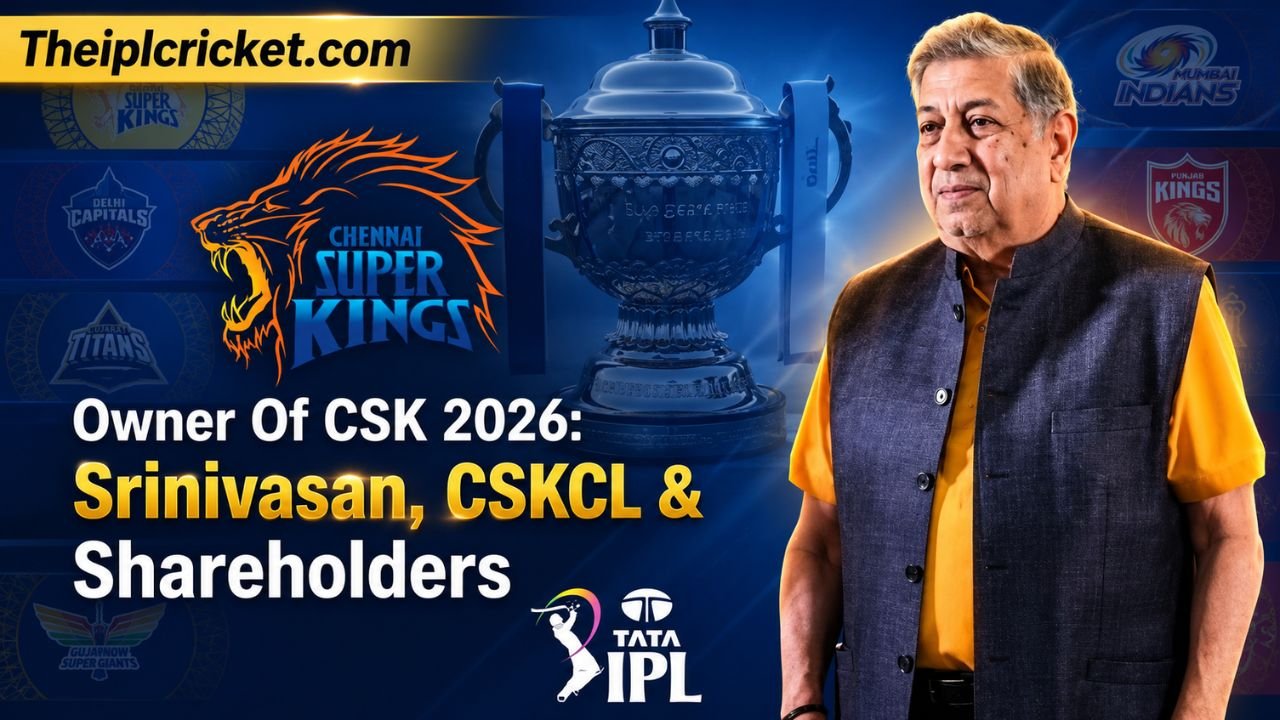
Chennai Super Kings ranks among the most followed teams in Indian cricket, and fans keep asking the same question every season. Who actually owns this franchise? Most people assume one businessman owns the whole team, but that picture isn’t complete. The real answer involves a registered company, a group of shareholders, and a leadership team that changed quite a bit in recent years.
This article describes exactly about Owner of CSK, so you get facts instead of guesswork. You’ll see how the company works, who sits on the board, and why the story shifted after 2024. Each section below covers a different angle, from the founders to the current shareholding pattern, so you walk away with a clear picture of who calls the shots at Chennai Super Kings.
About CSK’s Ownership
CSK doesn’t belong to a single person. All legal rights to the franchise are owned by a registered company known as Chennai Super Kings Cricket Limited. This firm deals with sponsorship, merchandising, and all including the administrative decision-making of the team. Since CSKCL is a legitimate company, it is reported to the BCCI as any other franchise owner. Board of this company makes the ultimate decision on important matters, and day-to-day matters of running the game of cricket remain with the team management and coaches.
Owner Of CSK – The Real Story Behind Chennai Super Kings
Chennai Super Kings was created in 2008 as a part of India Cements, which is a cement production corporation owned by N. Srinivasan. The franchise was estimated to be costing 91 million dollars, and this represented a huge gamble on an untested league. The IPL was new to the minds of cricket enthusiasts, and through this, India Cements was literally taking a big gamble with regards to investing heavily in a team based in Chennai.
This early ownership arrangement was okay until there arose issues of conflict of interest. Srinivasan was in a senior position in the BCCI, and at the same time he owned a franchise of an IPL team in his company. This incursion subsequently extended to the Supreme Court, whose verdict was that the arrangement was causing an apparent conflict. This required CSK to have a different corporate identity, other than India Cements.
The Supreme Court Ruling That Changed CSK Forever
One of the conflict of interest cases found its way into the Supreme Court since Srinivasan served in the BCCI office at the same time as owning an IPL team in his company. The court concurred that the arrangement brought about a real conflict, and this decision pushed CSK to part with India Cements in its entirety.
That ruling led the franchise on the path of a new corporate structure. CSK needed its own dedicated company, and this requirement led to the formation of the entity that still runs the team today.
Chennai Super Kings Cricket Limited Explained
Chennai Super Kings Cricket Limited CSKCL was established in December, 2014. This action transferred the complete independence of CSK to India Cements and made it the first IPL franchise to be a standalone company.
CSKCL now deals with all matters related to the brand, such as franchise development internationally as well as licensing. In South Africa, CSK’s international involvement in the gallery competition of the SA20 league and in the American competition of Major League Cricket is also under the supervision of the company.
Core Functions Handled By CSKCL
- Managing sponsorship and commercial partnerships for the CSK brand
- Overseeing merchandising rights across India and international markets
- Running CSK’s sister franchises in South Africa and the United States
- Reporting financial and administrative matters directly to the BCCI
N. Srinivasan’s Role As Owner Of CSK
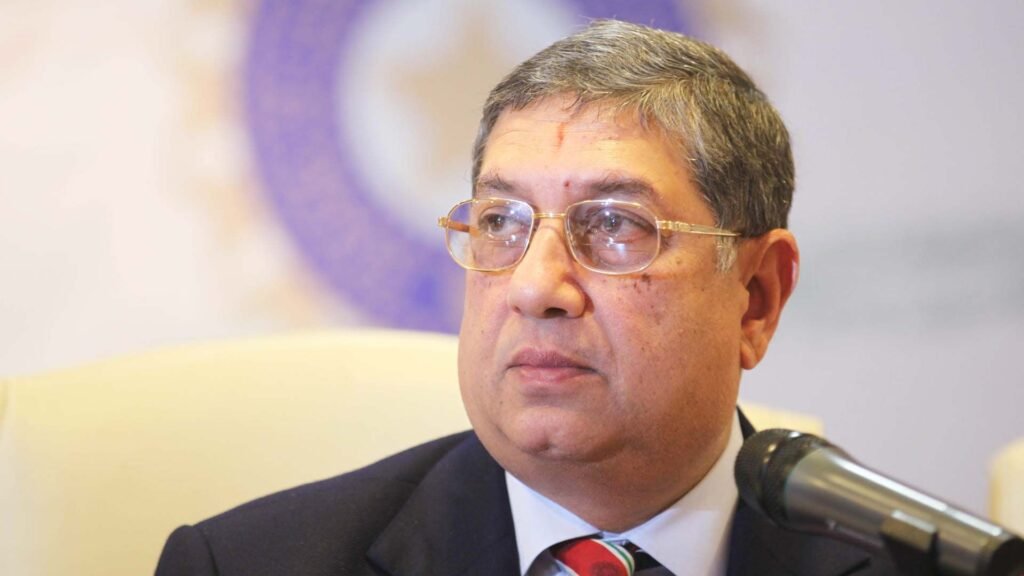
The most well-known name associated with CSK is that of Srinivasan, although his status changed multiple times through the years. He was the longtime head of the franchise, but later retired, allowing his cousin R. Srinivasan to assume the position of chairman.
In February 2025, just after selling his family interest in India Cement to UltraTech Cement, he re-joined the board of directors of CSKCL as its chairman. This is timely as it eliminated a similar conflict of interest issue that had already made CSK enter into its own company.
Rupa Gurunath And The New Leadership Shift
Rupa Gurunath was appointed to the board of CSKCL as another director in February 2025, and her father, Reebok, was reinstated as chairman in the same month. Various reports indicate that she currently leads much of the operational aspect, such as, planning of auctions and franchise development strategy.
This transition marks a generational transition within the leadership of CSK. Her father continues to bear the role of the public-facing chairman, but day-to-day strategic decision-making is flowing more and more through her.
Owner Of CSK Shareholding Pattern
The ownership within CSKCL is not the same as most fans imagine. The following table presents the stakeholders associated with the franchise, according to company disclosures in various time frames.
| Entity / Person | Role Or Stake | Details |
| Chennai Super Kings Cricket Limited | Franchise owning company | Holds full legal and commercial rights to CSK since 2014 |
| India Cements Shareholders’ Trust | Around 30 percent stake | Carried over from the original India Cements ownership period |
| Sri Saradha Logistics | Around 6.9 percent stake | Listed among CSKCL’s known stakeholders |
| Life Insurance Corporation of India | Around 6 percent stake | Institutional investor from the earlier ownership transition |
| N. Srinivasan | Chairman and director | Personal shareholding sits close to 0.11 percent as per recent board data |
| Rupa Gurunath | Director | Handles operational leadership alongside her board position |
| Chitra Srinivasan | Minor stakeholder | Family member listed with a small ownership portion |
| EWS Finance And Investments Private Limited | Largest single shareholder | Holds close to 47 percent stake based on recent filings |
Not all these figures are included in the latest disclosures, so they may not necessarily correspond to the most recent figures. The personal stake of Srinivasan is currently under 1 percent, which demonstrates that he is an authority figure based on his position on the board and not because of a huge personal holding.
Is MS Dhoni The Owner Of CSK?
Some fans are always inclined to believe that Dhoni has a share in the franchise due to the attachment of his name to the team. He does not have any ownership or promoter interest in CSKCL. Dhoni is the most popular player in the franchise and the long-time captain, and his views are valuable in cricketing-related issues, but the ownership rests fully in the hands of the board and shareholders of CSKCL.
This confusion isn’t unique to CSK either. Fans often mix up captaincy influence with actual ownership across several IPL teams, since star players tend to shape a franchise’s public image more than any boardroom decision does.
CSK’s Management Team Beyond Ownership
As the CEO of CSKCL, K.S. Viswanathan has overall responsibility for the daily activities of the franchise. He is a respected figure in the league, who manages to maintain CSK’s stability even in difficult seasons on the field.
Long-term direction is made by the board, running the operations is done by Viswanathan, and decisions on players are carried out by the cricketing staff on a separate basis. This layered setup keeps corporate strategy and match-day cricket clearly divided.
Key People Running CSK Today
- N. Srinivasan as chairman, overseeing board-level strategy
- Rupa Gurunath as director, managing operational and auction decisions
- K.S. Viswanathan as CEO, handling daily business operations
- The coaching and support staff, managing all cricketing decisions independently
N. Srinivasan Background And Career Journey
Srinivasan was born in the year 1945 in a state that is known as Tamil Nadu in Kallidaikurichi. He graduated with a Bachelor of Science at Loyola College in Chennai, followed by a Master of Chemical Engineering course at the Illinois Institute of Technology in the United States.
His professional life has been in business and administration of cricket. He was the decades-long managing director of India Cements, a long-time president of the Tamil Nadu Cricket Association, a BCCI president, and the first chairman of the International Cricket Council.
How Franchise Ownership Works Across The IPL
CSK’s structure isn’t unique to Chennai. Mumbai Indians operates under Reliance Industries, while Royal Challengers Bengaluru runs under United Spirits. Neither team belongs to a single celebrity, even though captains often get mistaken for owners by casual viewers.
CSK follows this same corporate model. A registered company holds legal ownership, a board decides strategy, and players simply represent the brand during matches. This separation protects franchises from personal financial risk and keeps business decisions apart from cricketing performance.
Common Mistakes Fans Make About CSK Ownership
Outdated articles create most of the confusion around CSK’s ownership today. These errors show up repeatedly across search results and social media discussions.
Frequent Misunderstandings To Avoid
- Believing Srinivasan personally owns most of CSK, when his direct stake stays under 1 percent
- Treating India Cements and CSKCL as identical, despite their separation since 2014
- Assuming Dhoni holds a stake simply because he represents the franchise publicly
- Quoting old shareholding percentages that no longer match current filings
- Overlooking that Srinivasan stepped away from the chairman role before his 2025 return
Why Stable Ownership Helps CSK Perform Better?
CSK’s calm decision-making traces directly back to its ownership approach. The franchise is more patient with old players than the majority of the competitors, and they do not react to the move in the auction. This philosophy is the reason CSK has emerged with five IPL titles even when other franchises keep losing and replacing their teams. The ownership aspect determines almost all cricketing decisions, such as retaining a player, dealing with a downturn in form, and so on.
What’s Next For CSK’s Ownership Structure
CSKCL’s setup looks steady for the next few seasons, though a few changes deserve attention. Rupa Gurunath’s operational role will likely grow further, based on how quickly she’s taken on responsibilities since 2025.
CSKCL’s ventures in South Africa and the United States are also diversifying revenue beyond the IPL, which could shift shareholder priorities over time. Expect more attention on promoter-linked entities like EWS Finance as CSK’s brand value keeps rising each year.
Conclusion
CSK’s ownership story isn’t about one wealthy individual controlling everything from behind the scenes. Chennai Super Kings Cricket Limited is the legal holder, and Srinivasan is the board chairman, with his return in 2025 and the power held by a structured promoter group as opposed to a single dominant figure. The origin story of the franchise was crafted by India Cements, but CSKCL has operated independently since 2014, and such distance safeguards the team from the conflict-of-interest issues that necessitated this restructuring in the first place. This long-term ownership model can probably remain unchanged as CSK ventures into new markets and new forms: stable, corporate and long term, not flashy headlines.
FAQs
Chennai Super Kings Cricket Limited owns the franchise legally and commercially.
No, his personal shareholding stays under 1 percent of the company.
No, Dhoni holds no ownership or promoter stake in the franchise.
CSKCL was incorporated in December 2014, separate from India Cements.
India Cements owned CSK directly from 2008 until the 2014 restructuring.
K.S. Viswanathan serves as CEO and manages daily operations.
She serves as director and manages much of the operational strategy.
A Supreme Court ruling found a conflict of interest, forcing the split.
Yes, CSKCL owns franchises in South Africa’s SA20 and US Major League Cricket.
EWS Finance and Investments Private Limited holds the largest known stake.

Karan Malhotra is a passionate cricket enthusiast who enjoys writing about the IPL, international cricket, player performances, and match updates. At TheIPLCricket, he focuses on creating simple, informative, and engaging content to help fans stay updated with the latest happenings in the cricket world.
Leave a Reply