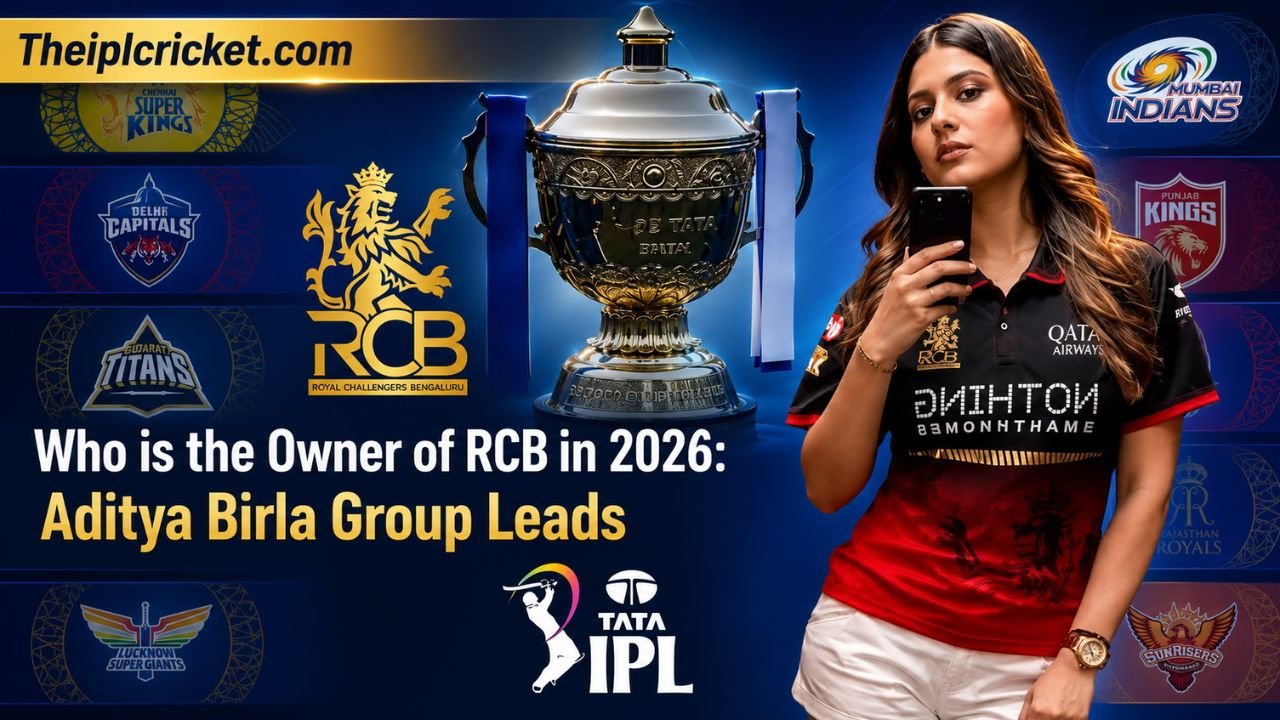
Royal Challengers Bengaluru fans spent years associating the franchise with one liquor brand. That link broke completely in 2026, when a fresh ownership group took charge. The Owner of RCB today is not one company anymore, but a coordinated team of four major investors, each holding a defined stake in the franchise. This shift touches everything from sponsorship deals to long-term team building, and it gives RCB a business foundation that looks nothing like its earlier years.
Most fans still picture Vijay Mallya or Diageo when they think about who runs RCB. That picture no longer matches reality. A consortium led by the Aditya Birla Group now controls the franchise fully, and this article walks through exactly who holds what share, how this deal happened, and why it changes RCB’s direction going forward.
Who Owns Royal Challengers Bengaluru Today?
RCB is currently governed with a structure of shared ownership rather than a single company. The four individual investors have a stake in the franchise, and individually each one brings a different aspect to the way the team operates off the field.
Aditya Birla Group
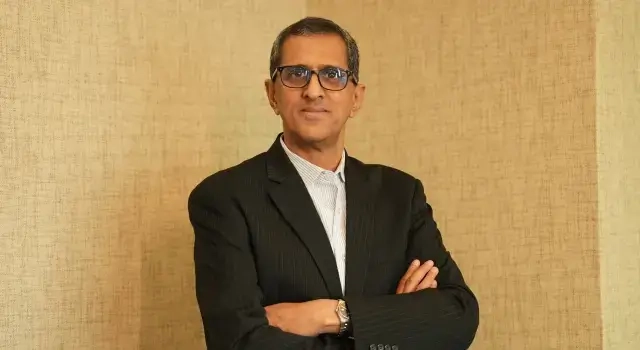
Aditya Birla Group holds the biggest share and leads all major decisions. The Times of India Group, Bolt Ventures, and Blackstone are co-owners with it. These four parties jointly purchased the entire stake of Royal Challengers Sports Private Limited, the company that technically operates both men’s and women’s teams in Royal Challengers.
This kind of joint ownership setup has become common across global sports leagues. Consequently, it has turned RCB into more of a professionally run business rather than one led by a single person’s initiative.
Aditya Birla Group’s Role in RCB’s New Leadership
At the pinnacle of the ownership chain of RCB is Aditya Birla Group. The conglomerate operates in cement, metals, telecom, and financial services; hence, it carries substantial and constant capital and not short-term finance.
The new structure saw Aryaman Vikram Birla become Chairman and Satyan Gajwani of The Times Group as Vice Chairman. This combination links industrial strength with strong media connections right from the leadership level.
The chairperson of the broader Aditya Birla Group, Kumar Mangalam Birla, has called RCB an opportunity to offer the company’s heritage into the field of international sport. Therefore, fans can expect a long-term brand approach rather than a quick commercial flip.
Full List of RCB’s Owners and Co-Owners
Each partner in this consortium plays a specific role instead of simply holding a passive stake. Knowing each partner’s background explains why this deal drew so much interest across the sports and business world.
Ownership Breakdown
| Owner / Co-Owner | Role | Stake Type | Key Details |
| Aditya Birla Group | Lead Owner & Chairman | Majority / Controlling Stake | Indian conglomerate; acquisition led by the Birla family; Aryaman Vikram Birla is stated to be Chairman of the franchise under the new structure. |
| The Times Group | Co-Owner | Consortium Stake | Indian media conglomerate (Sahu Jain family); Vice-Chairman role through Satyan Gajwani in the consortium. |
| Bolt Ventures | Co-Owner | Consortium Stake | Sports investment firm associated with David Blitzer; part of the consortium group. |
| Blackstone (BXPE) | Co-Owner | Consortium Stake | Global investment firm represented in consortium; provides private equity support. |
Each entity listed above adds its own layer of strength. The result is the creation of a new company, RCB, whose new team has expertise in finance, media and sports strategy, and international investments.
The Founding Story Behind Royal Challengers Bengaluru
RCB started business in 2008 when the first season of the IPL was going on. He acquired the Bengaluru franchise with the United Breweries Group at the opening auction of the league for USD 111.6 million.
Mallya used the name of his Royal Challenge brand of whisky, which was the name of the team, and the selection is still the reason some fans wear the colors red and black to this day. He personally operated the franchise over a few years and made it one of the most discussed brands in the league, though it did not win a title until then.
Mallya finally stepped down from the helm of United Spirits Limited in 2016 due to legal and financial problems. However, since that time, he has never owned an ownership portion of RCB, although he continues to be associated with the franchise through its initial name.
Diageo’s Long Corporate Run With RCB
After Mallya left, Diageo completely owned RCB via its subsidiary, United Spirits Limited. This business period spanned nearly a decade and developed the modern brand image of the franchise to a large degree.
In the process, RCB was greater as a corporate subsidiary compared to an independent driving force in this period. Diageo concentrated on consistent management as opposed to abrupt changes in ownership, and that provided the franchise with a steady foundation going into the 2020s.
This decade-long chapter closed in March 2026, when Diageo agreed to sell its entire stake to the Aditya Birla-led group. RCB then moved from a beverage company’s control into a diversified investment group’s hands almost overnight.
Breaking Down the Ownership of the RCB Deal
The sale in 2026 can be considered one of the largest sports deals in the history of Indian business. A closer glance at the numbers, however, makes this deal understandable to audiences America-wide rather than just to cricketing circles.
United Spirits Limited sold its complete stake in Royal Challengers Sports Private Limited for around ₹16,706 crore, which works out to roughly $1.78 billion. This figure alone crossed the combined entry fees that newer franchises like Lucknow Super Giants and Gujarat Titans paid back in 2021.
Key Deal Points
- This deal was finalized on March 24, 2026, just before the IPL 2026 season began.
- The contract extended to the men’s team of the IPL and the women’s team of the WPL.
- Premier League football owners, private equity firms and Indian business leaders have been reported as interested in the final deal being closed before.
- Adar Poonawala of Serum Institute of India is said to have offered a bid, but failed to do so before the deadline.
This level of competition pushed RCB’s valuation far above earlier franchise sale benchmarks across the league.
Women’s Team Ownership Under the Same Group
The 2026 deal did not stop at the men’s IPL side. It also covered the women’s WPL team, since both squads run under the same parent company, Royal Challengers Sports Private Limited.
This point matters because RCB Women has built a strong track record recently, winning multiple WPL titles and pulling in huge fan engagement online. Now, the same consortium that owns the men’s team also controls the women’s program, which likely means shared marketing plans and coordinated brand strategy across both sides.
Regulatory Steps Before Full Ownership Transfer
Deal announcements and legal completion rarely land on the same date, and RCB’s sale followed that exact pattern. Even after the consortium agreed on price and structure, regulatory clearance remained a required step before the transfer became fully legal.
Approval Checklist
- The Board of Control for Cricket in India needed to approve the ownership change first.
- The Competition Commission of India also required sign-off before the deal could officially close.
- Until these approvals came through, Royal Challengers Sports Private Limited technically remained under United Spirits Limited on paper.
This gap between announcement and legal completion explains why some reports describe the timeline slightly differently depending on the exact date referenced.
Financial Strength of RCB’s Ownership Group
All the partners of the consortium contribute to RCB with a different financial scale. The combined mix provides a franchise with several funding options as opposed to relying solely on the balance sheet of one company.
The net worth of Aditya Birla Group is over $70 billion, which is supported by the major companies of the corporation, such as UltraTech Cement and Hindalco Industries. The Times Group has its own secret numbers, but the total of advertising and the earnings of media reach billions of dollars annually.
Bolt Ventures is similar to a specialized investment company, linked to the network of sports investor and venture David Blitzer, and its independent net worth remains undisclosed. Blackstone is, in the meantime, one of the largest alternative investment companies in the world with assets consistently exceeding $1 trillion.
What This Ownership Shift Means for RCB’s Future?
Owner of RCB’s direction will likely shift in noticeable ways under this new structure. The Times Group’s media strength could expand the franchise’s reach well beyond its current fan base across India and abroad.
In the meantime, the industrial links of Aditya Birla Group can provide a sponsorship option that has never been properly exploited by a beverage company such as Diageo. The fact that Blackstone is also involved highlights infrastructure investment in the future, be it stadium upgrades or enhanced digital fan experiences.
Bolt Ventures’ background in sports investing suggests sharper scouting systems and stronger player development pipelines ahead. In total, this strategic strength places RCB in a strong long-term growth not just short-term commercial benefits.
Final Thoughts
RCB’s ownership journey went from one man’s personal ambition to a beverage giant’s decade-long corporate hold, and now sits with a powerful investment consortium built for long-term growth. Nothing has changed the franchise on the field, and the players, colors, and fans have stayed the same. What is different is completely in the boardroom, as four partners, who are financially sound, are now involved in the future of RCB as opposed to depending on the decisions of one company.
Any person who does research about the owner of RCB must not forget it is no longer a single name; it is a network of forces with various capabilities towards the same path. Said change is indicative of the direction of professional sports ownership in the world, and now RCB is one of the most illustrative examples of them in Indian cricket.
FAQs
Aditya Birla Group leads a four-party consortium that owns RCB.
Vijay Mallya founded RCB in 2008 through United Breweries Group.
No, Mallya has held no ownership stake in RCB since 2016.
The deal closed at approximately $1.78 billion, or ₹16,706 crore.
United Spirits Limited, a Diageo subsidiary, sold its full stake in RCB.
The Times Group, Bolt Ventures, and Blackstone hold co-owner stakes.
Aryaman Vikram Birla serves as Chairman under the new ownership structure.
Yes, the deal includes both the men’s IPL team and the women’s WPL team.
The deal closed on March 24, 2026, just before IPL 2026 began.
The BCCI and the Competition Commission of India approved the transfer.

Karan Malhotra is a passionate cricket enthusiast who enjoys writing about the IPL, international cricket, player performances, and match updates. At TheIPLCricket, he focuses on creating simple, informative, and engaging content to help fans stay updated with the latest happenings in the cricket world.
Leave a Reply