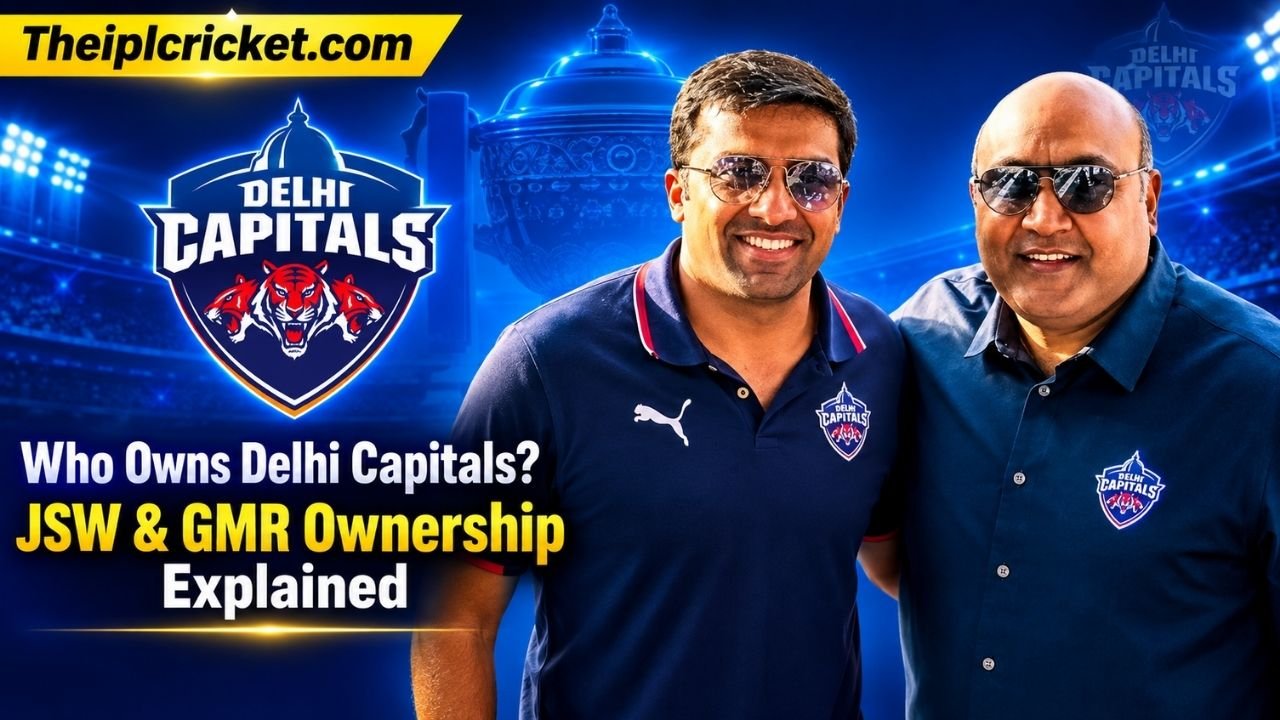
Cricket fans often ask who really controls their favorite IPL franchise, and Delhi Capitals draws that question every season. The owner of DC decides far more than just the roster. Ownership shapes coaching appointments, retention budgets, and the direction the franchise takes over the years. Delhi Capitals has built its identity around two major Indian business groups, and understanding their roles gives fans a clearer picture of why the team operates the way it does.
This article walks through the ownership structure of Delhi Capitals, the history behind it, and the people who steer the franchise today. It also covers the financial background of both owning groups, since their wealth and business focus directly influence how much the franchise invests in players and infrastructure.
Who is the owner of DC in IPL 2026?
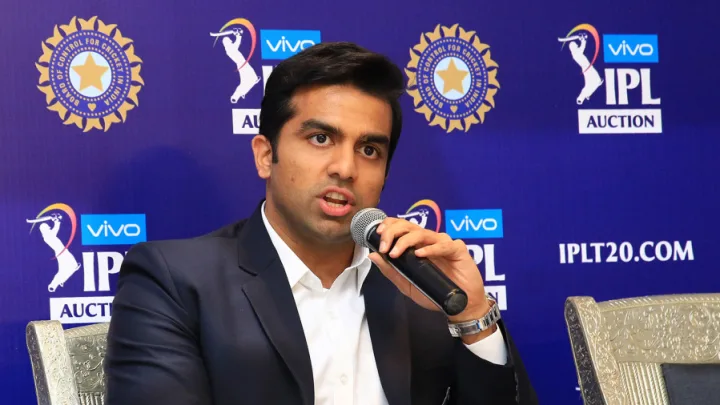
Delhi Capitals are owned by JSW Group and GMR Group in a joint venture, and each corporation owns 50 per cent of the franchise. Neither of the two groups works in isolation, and thus any significant decision that comes up must be through the two parties before it is finalized. Such an equal divide has not changed since 2018, which offers the franchise an unprecedented feeling of ownership stability compared to other IPL franchises, which have experienced several changes in ownership.
Parth Jindal is the representative of JSW Group in Delhi Capitals, and Kiran Kumar Grandhi is the representative of the GMR Group. These two men go to auctions in person, and both of them help in constructing the long-term strategy of the team.
Delhi Capitals Franchise Overview
Delhi Capitals is a team in the Indian Premier League, and represents the capital city of India. The franchise became a part of the league in the very first season in 2008 but was then called differently at that time. The team has been playing in the country as Delhi Daredevils for more than a decade, when it experienced a massive change through a significant change in ownership.
The franchise hosts home matches in Arun Jaitley Stadium, and as part of a rebranding, it changed its name to Delhi Capitals in 2019. The team has since then paid great attention to nurturing the young Indian cricketers, and this strategy has become one of its trademarks in the league.
JSW And GMR Joint Ownership Explained
Delhi Capitals runs through a partnership model rather than a single-owner setup, and this structure influences nearly every business decision the franchise makes. JSW Group and GMR Group are co-located on the ownership board, such that no individual company can impose major changes.
This is a good arrangement since the two groups add their differences to the table. GMR brings financial stability that was developed over the decades of infrastructure development, whereas JSW brings sporting knowledge developed through its investments in sports in various directions. Collectively, these advantages have assisted Delhi Capitals in increasing a notch higher since 2018.
Delhi Capitals Ownership Timeline
Delhi Capitals has gone through only one major ownership shift since its founding, which makes its history fairly straightforward to trace. The table below lays out this timeline clearly.
| Ownership Phase | Duration |
| GMR Group (Sole Owner) | 2008–2018 |
| GMR Group (50%) and JSW Group (50%) | 2018–Present |
Delhi Daredevils Era
In the First auction of IPL in 2008, the Delhi franchise was bought by GMR Group at USD 84 million. The team played under the name of Delhi Daredevils over 10 seasons, and throughout this time, GMR had to deal with all management of the franchise on its own.
Delhi Capitals Era
JSW Group joined in 2018 and purchased a 50% holding at an approximate cost of ₹550 crore. After this transaction was complete, the franchise abandoned its previous name and became Delhi Capitals, looking forward to the 2019 season, a new page in its history.
JSW Group Business Profile
JSW Group operates as one of India’s largest business conglomerates, and its reach extends across steel, cement, energy, paints, and infrastructure. Sajjan Jindal leads the group, and under his direction, JSW has expanded into a name recognized well beyond India’s borders.
Sports form a growing part of JSW’s portfolio too. The group runs JSW Sports, which supports athletes across football, kabaddi, and Olympic disciplines, and this sporting arm brought fresh scouting methods into Delhi Capitals after 2018.
JSW Group Financial Strength
The aggregate business value of JSW Group is far beyond USD 13 billion, and according to some estimates, it is USD 22 billion depending on the market performance. JSW Steel is one of the largest steel manufacturers in India; it alone will provide the group with a strong financial impact that will sponsor Delhi Capitals.
Since JSW earns money in such a myriad of sectors, the group is able to afford to invest in consistent funds in the development of its players and the franchise-related infrastructure without the issue of financial constraint influencing cricket decision-making.
GMR Group Business Profile
GMR Group has gained prominence on massive infrastructural projects, and its company operations cut across infrastructural projects such as airports, power, roads, and development of cities. The company was founded by G.M. Rao, whose management has brought GMR to an international name in the space of decades.
The group is the operator of one of the busiest airports in the world, Indira Gandhi International Airport, located in Delhi. The experience in dealing with intricate and hefty-budget projects allowed GMR to have sufficient experience to operate an IPL franchise during the inaugural season of the league.
GMR Group Financial Strength
GMR Group possesses billions of dollars in assets, most of which originated as a result of continuous revenue flows of airport services and energy ventures. By creating consistent revenue over long-term periods as opposed to the periodically high revenue generated in short periods by these sectors, GMR has been free to sponsor Delhi Capitals since 2008.
G.M. Rao is an individual with a personal net worth of approximately USD 3.2 billion, with years of development in infrastructure and energy. This financial base enables GMR to strategize in the franchise over a duration of three years rather than taking a detour with each passing season.
Net Worth Of Delhi Capitals Owners
Both key figures behind Delhi Capitals bring significant personal wealth, though their fortunes come from entirely different industries. Their combined influence shapes not just business decisions but also the cricketing culture within the franchise.
Parth Jindal Net Worth
Parth Jindal’s personal wealth stands at roughly ₹600 crore. He earns this through leadership roles across JSW Cement and JSW Paints, and his sporting interests extend beyond cricket since he also owns Bengaluru FC in the Indian Super League.
Kiran Kumar Grandhi Net Worth
Kiran Kumar Grandhi holds a real-time net worth estimated at USD 1.7 billion. He serves as CEO and Managing Director at GMR Airports, and he also holds the position of Corporate Chairman at GMR Group, making him one of the most influential figures in Indian infrastructure.
Delhi Capitals Brand Valuation
The estimated brand value of Delhi Capitals is between USD 100 million and USD 110 million in 2026. This number continues to increase annually due to IPL media rights operations, sponsorship contracts, and an increasing number of fans online.
Delhi Capitals is also in the middle bracket in terms of valuation compared to some of the other top franchises in the league. Nevertheless, since JSW became a part of the ownership group in 2018, its brand value increased steadily, and the trend should be presumed to remain unchanged as the team develops an improved on-field record.
Franchise Management Between JSW And GMR
Delhi Capitals are managed by both JSW Group and GMR Group, not dictated by any company. JSW lays more emphasis on sport culture, young academies, and scouting, whereas GMR is more concerned with operational stability and financial planning.
Recent reports indicate that there is a rotation policy that is emerging between the two owners. In this system, the men’s IPL team and the women’s WPL team are operated by GMR and JSW respectively, with the two playing swapping roles in the next round. Such an organized system of handing over makes the franchise evade internal wrangles that have destabilized other IPL teams over time.
Importance Of Stable Ownership For Delhi Capitals
Stable ownership gives a franchise the financial backing and professional structure it needs to compete season after season. Delhi Capitals benefits from this in several clear ways, since both JSW and GMR bring long-term thinking rather than short-term reactions to the table.
- Financial security allows coaching staff to plan retention strategies across multiple seasons instead of scrambling before each auction.
- Professional management keeps scouting networks and fitness programs organized throughout the year.
- Equal partnership prevents one owner from dominating every decision, which reduces internal conflict.
- Combined business expertise brings both sporting knowledge and financial discipline into franchise planning.
After JSW joined in 2018, Delhi Capitals showed clear improvement on the field. The team reached its first IPL final in 2020 under Shreyas Iyer’s leadership, and it has since qualified for the playoffs in multiple seasons.
Ownership Outlook For Delhi Capitals
Under the same ownership structure of JSW-GMR, Delhi Capitals will remain until IPL 2026, and neither has registered an intention to withdraw from this long-term investment. This will allow fans to anticipate further spending on training facilities, scouting system, and a greater concentration on constructing a team that can finally capture the title.
The new policy of rotating between GMR and JSW may turn out to be one of the most significant operational changes witnessed in the franchise in many years. With this policy coming fully into force, it can even provide a blueprint of how other IPL franchises will organize shared ownership in the future.
Final Thought
Delhi Capitals runs on a genuine 50-50 partnership between JSW Group and GMR Group, and that structure has stayed firm since 2018 without major disruption. Parth Jindal and Kiran Kumar Grandhi lead their respective sides, blending JSW’s sporting ambition with GMR’s infrastructure discipline and financial stability.
This combination has already pushed the franchise to its first IPL final, and it continues to shape a squad built around young Indian talent. The team still chases its first title, but its ownership setup gives it a strong platform to keep competing at the top level for years ahead.
FAQs
JSW Group and GMR Group jointly own Delhi Capitals, each holding a 50% stake.
GMR Group owned the franchise alone from 2008 to 2018.
The franchise was renamed Delhi Capitals in 2019.
Parth Jindal represents JSW Group’s ownership interests.
Kiran Kumar Grandhi represents GMR Group’s ownership interests.
Delhi Capitals is valued between USD 100 million and USD 110 million in 2026.
Delhi Capitals has never won an IPL title.
Delhi Capitals reached its first IPL final in 2020.
GMR Group operates in airports, energy, highways, and infrastructure.
JSW Group operates in steel, cement, paints, power, and sports.
- Read More: Owner of GT | Owner Of PBKS

Karan Malhotra is a passionate cricket enthusiast who enjoys writing about the IPL, international cricket, player performances, and match updates. At TheIPLCricket, he focuses on creating simple, informative, and engaging content to help fans stay updated with the latest happenings in the cricket world.
Leave a Reply